Corgi Coca-Cola Stearman

Corgi Coca-Cola Stearman

Buy from Onbuy

£17.50

Go to deal

Overview

More than 10,500 Stearman Bi-Planes were built in the United States during the 1930's and 40's. Original used as training aircraft by various military forces the surplus aircraft were sold to the public and became popular for use as crop dusters and sports planes, to this day they are made use of at air shows for wing-walking performances. The Stearman, designed by American Lloyd Stearman, has a maximum speed of 124mph, a wingspan of 9.8m and weighs 876kg. It is designated a bi-plane as it has two wings, stacked one above the other. The livery on this Stearman Bi-Plane dons the Coca-Cola logo, which remains a homage to the very first writing style the name ‘Coca-Cola' was ever penned in. Frank Robinson, who was bookkeeper to the drink's inventor John Pemberton, suggested the branding Coca- Cola. It was his belief that the C's would look well in advertising, he wrote out the name in Spencerian Script, which was a popular writing style in the 1880's, and this has remained the essence of the company's logo to this day.
Overview

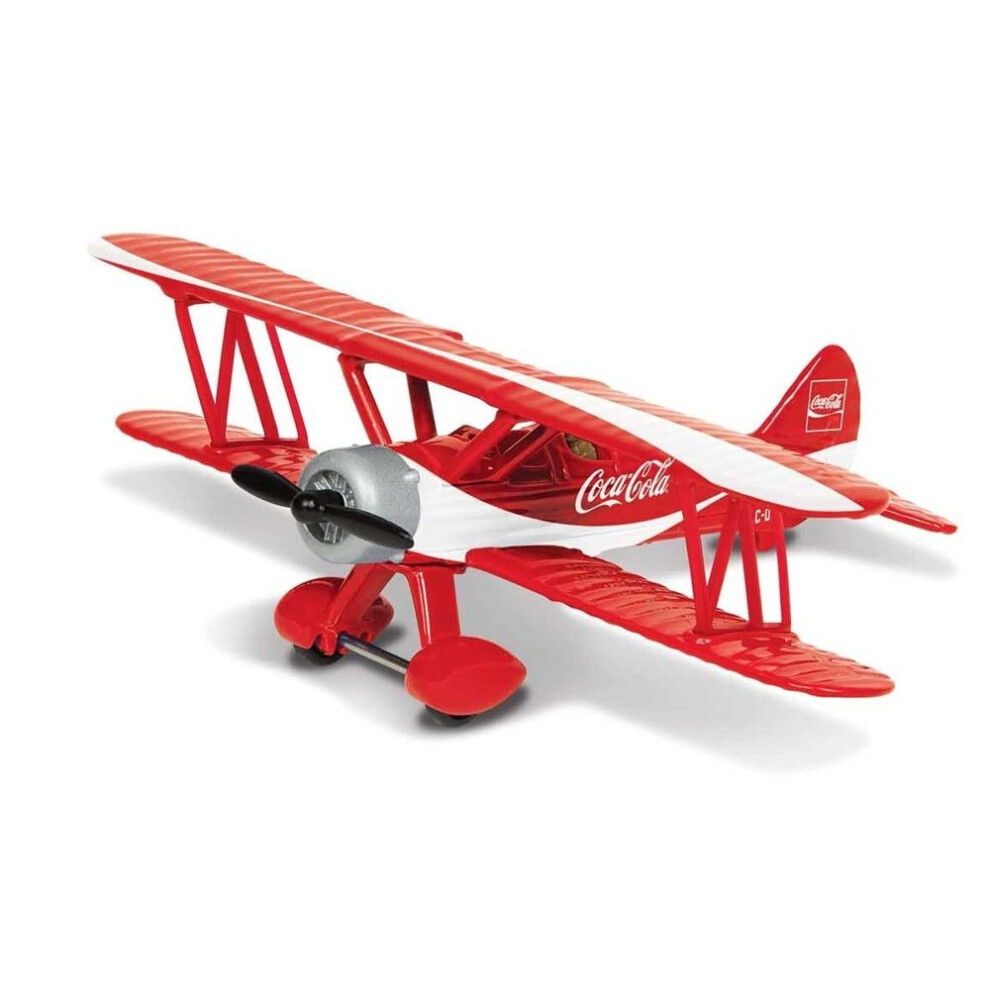
More than 10,500 Stearman Bi-Planes were built in the United States during the 1930's and 40's. Original used as training aircraft by various military forces the surplus aircraft were sold to the public and became popular for use as crop dusters and sports planes, to this day they are made use of at air shows for wing-walking performances. The Stearman, designed by American Lloyd Stearman, has a maximum speed of 124mph, a wingspan of 9.8m and weighs 876kg. It is designated a bi-plane as it has two wings, stacked one above the other. The livery on this Stearman Bi-Plane dons the Coca-Cola logo, which remains a homage to the very first writing style the name ‘Coca-Cola' was ever penned in. Frank Robinson, who was bookkeeper to the drink's inventor John Pemberton, suggested the branding Coca- Cola. It was his belief that the C's would look well in advertising, he wrote out the name in Spencerian Script, which was a popular writing style in the 1880's, and this has remained the essence of the company's logo to this day.